
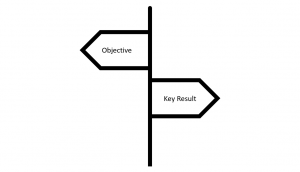
One of the frequently asked questions I get from teams starting out to adopt the OKR framework – Objectives and Key results, is how to distinguish between an objective and a Key result.
Additionally, how do we word these – so that there is less or no ambiguity.
While a detailed treatment of OKRs would need to go beyond a blog post, in this Chow, the following exercise to tag statements as an Objective or Key Result would help understand better.
To oversimplify the difference, consider Objectives as the equivalent of Outcomes desired. Outomes normally also have an association expectation of a change in behavior, such as a purchase decision or changing a habit.
The Key Results would be indicators that can be measured – or, sometimes, sensed and can act as interim steps or goals. these may indicate specific actions to be taken by the team owning an objective or outputs to be created,
Check your understanding with the fun quiz below.


4 Responses
Hi Shiv, I can relate to this, it is a real different world.
I was invited a few times to address students appearing for CET exams as an industry person and found it challenging to connect with them. I was able to connect somewhat as one of their concern was what if they do not get into a good college, which I was able to address by sharing real life examples.
Thanks Vasu. College “brand” no doubt helps early on in work life – corporate doors open more easily. But down the line, it is people’s motivation and track record that helps build careers. I am sure we have all seen examples affirming this. I have stressed with the mentees that I work with. An aside, the mentorship program I am involved in spans 4-5 months and so, I have had time to work on the “connect”! Yes – takes time and effort.
Hi Shiv – very well written – thanks for the write-up.
Many years ago I was a volunteer mentor for a couple of youth as part of Dream A Dream’s life skills mentoring program. This was in person mentoring where the mentee and I would meet periodically (usually on a weekend) and discuss general topics. There was no prescribed structure though all mentors did go thru a few hours of in person training. Based on that experience I can corroborate that it takes time for the mentee to open up, especially in that case given their lack of confidence in expressing in English which was the recommended language for communication. Switching to Tamil (in one case where the mentee was from Tamil Nadu) helped.
Can also relate well to your point on swings in mood and engagement level of the mentee and the need for mentor to shift gears accordingly.
I am sure the mentees are benefiting a lot from your vast and varied experience – hope you will come back to mentor more such students after you complete the current mentorships and possibly take a break!
Thank you, Bhasker!